
VANILLA
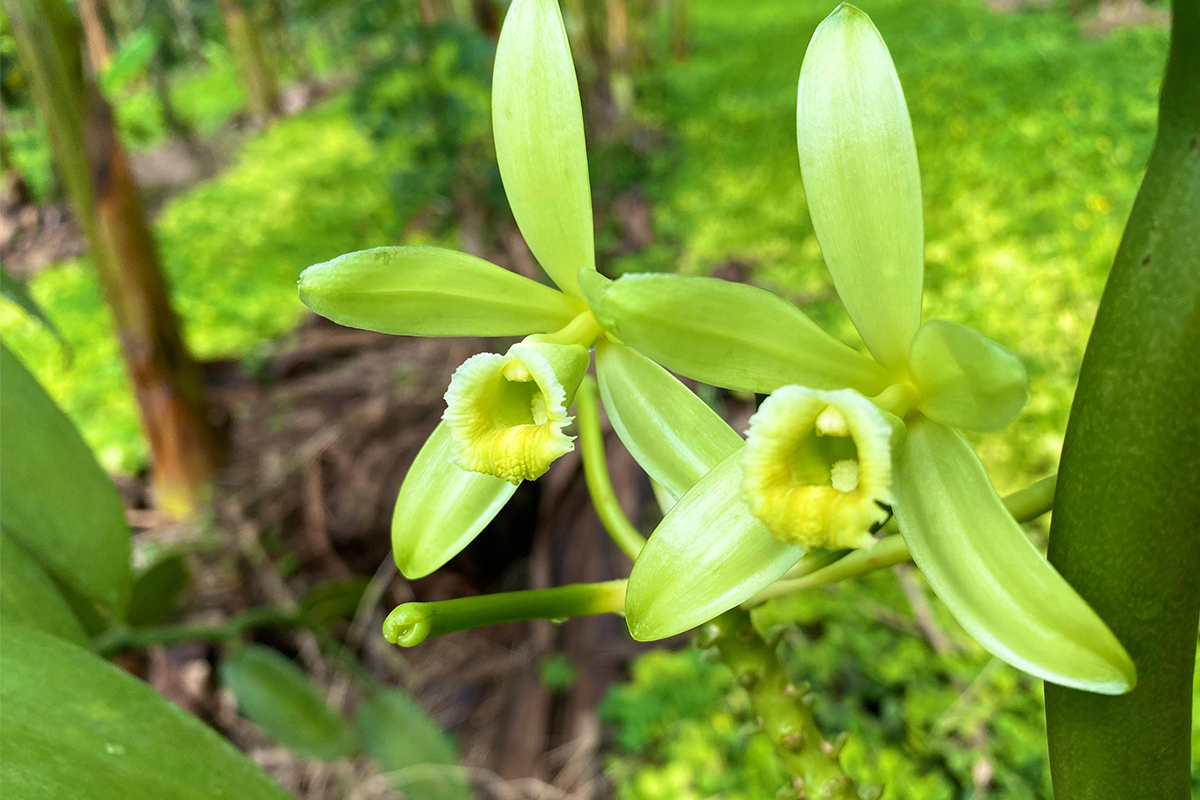
Vanilla is a type of orchid and vanilla in Uganda is called vanilla planifolia. Vanilla requires pollination by hand for each flower, so it is a really labour intensive plant to grow.
Our vanilla comes from Central Uganda. We only purchase vanilla from registered and trusted farmers at a fair price. All the vanilla resources are traceable. We manage curing, drying and conditioning vanilla (do you mean “in collaboration” – or – “you only sometimes supervise the staff, they do it mostly by themselves”…. I’m not sure what you mean. with local staff.
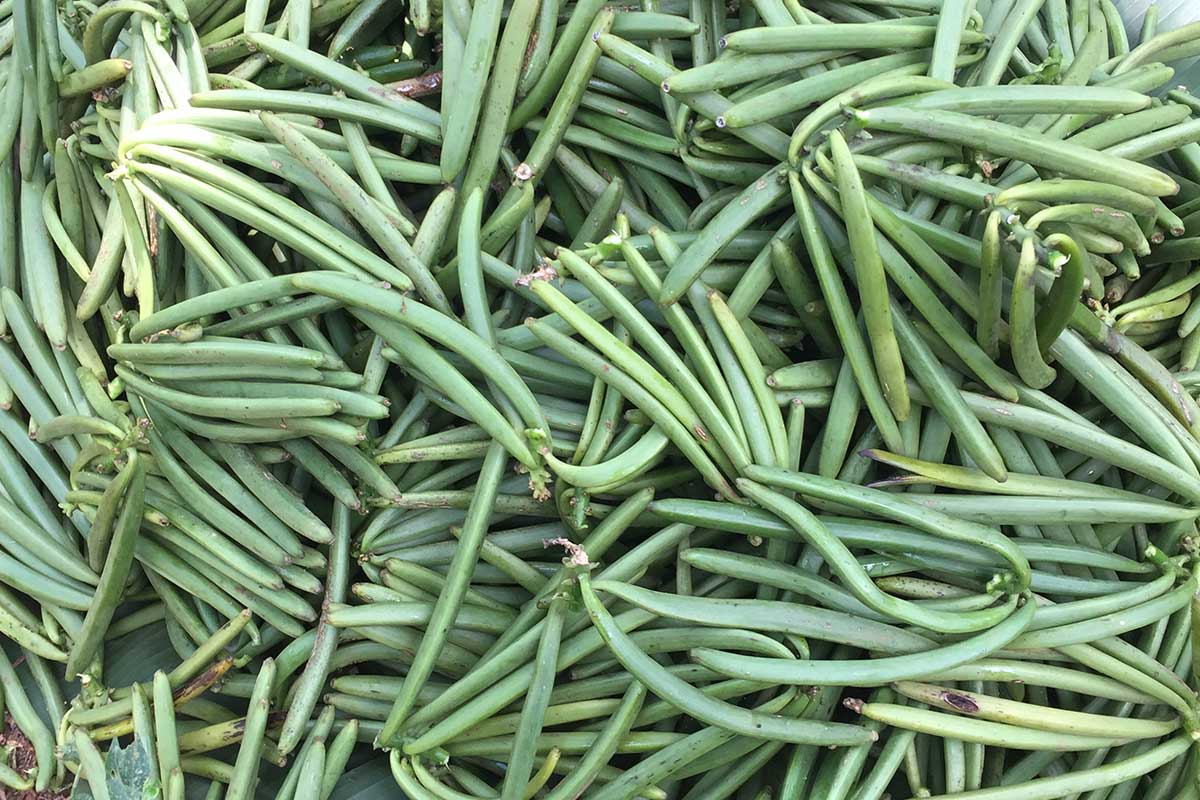
Vanilla takes a lot of time not only to grow but also to cure and to process.
It has to be boiled and kept in the sweating room at temperatures that require regular checking. Also, it has to be taken out to dry under the sun everyday.
After the sun drying stage, it enters the shade drying stage and finally reaches the final maturation process as the moisture level is checked.
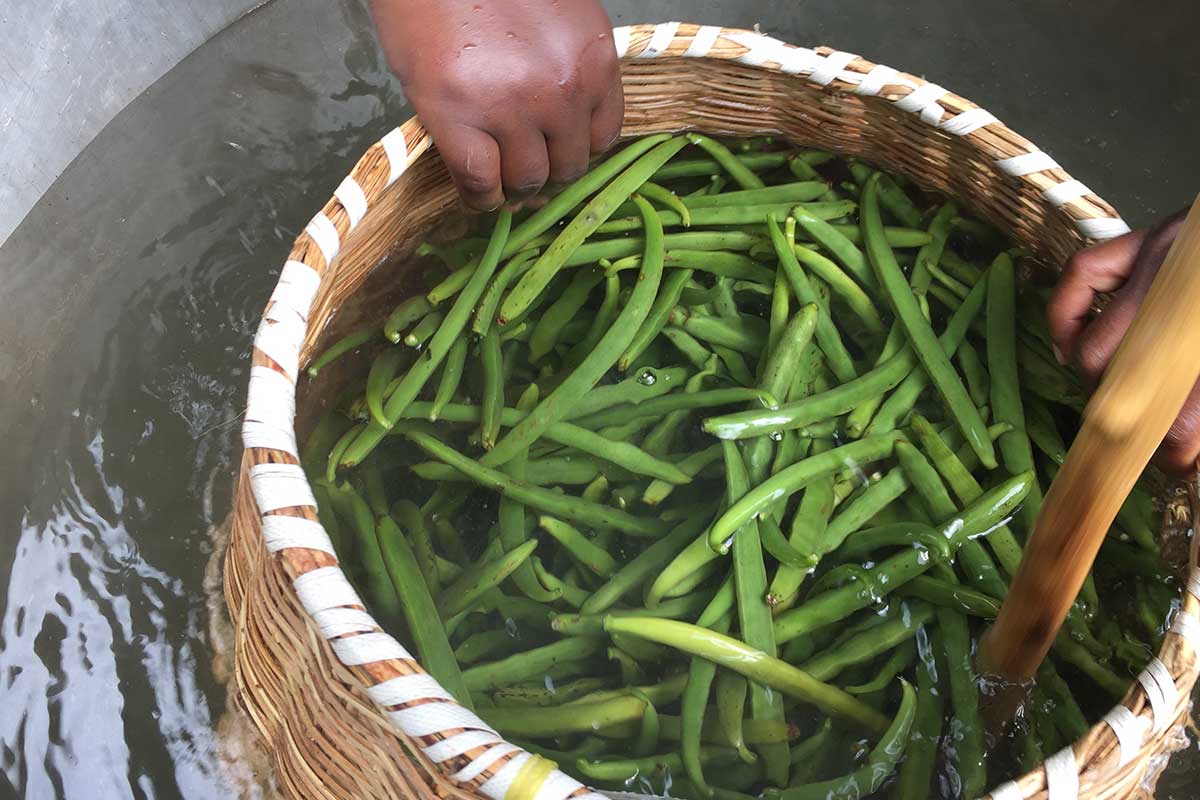
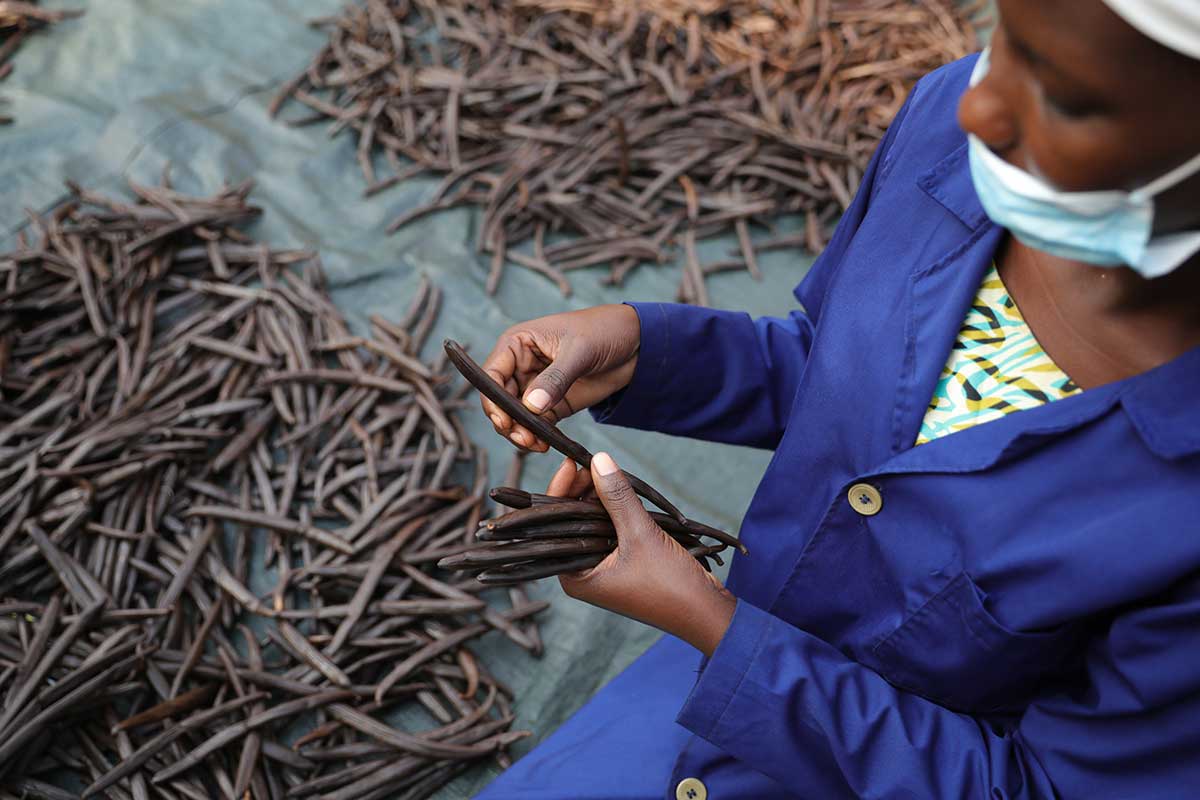
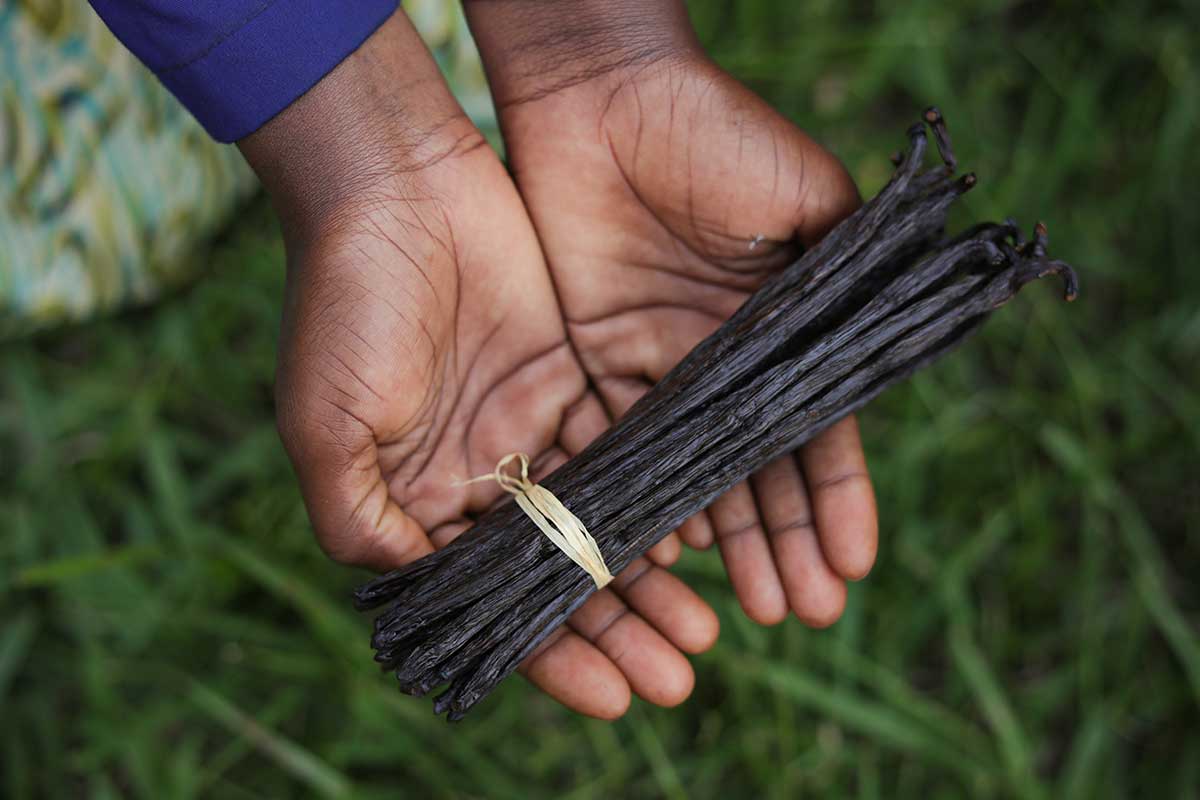
During this time, it is essential to check for mould and massage (you mean “massage” like using your hands to feel, and massage the vanilla pods?”) tens of thousands of vanillas. Finally, after 5 long months , the curing and processing has created that wonderful, sweet flavour.
Farm of Africa has a high standard of hygiene system such as washing hands and putting sterilizer on hands and all processing equipment thoroughly.
CACAO
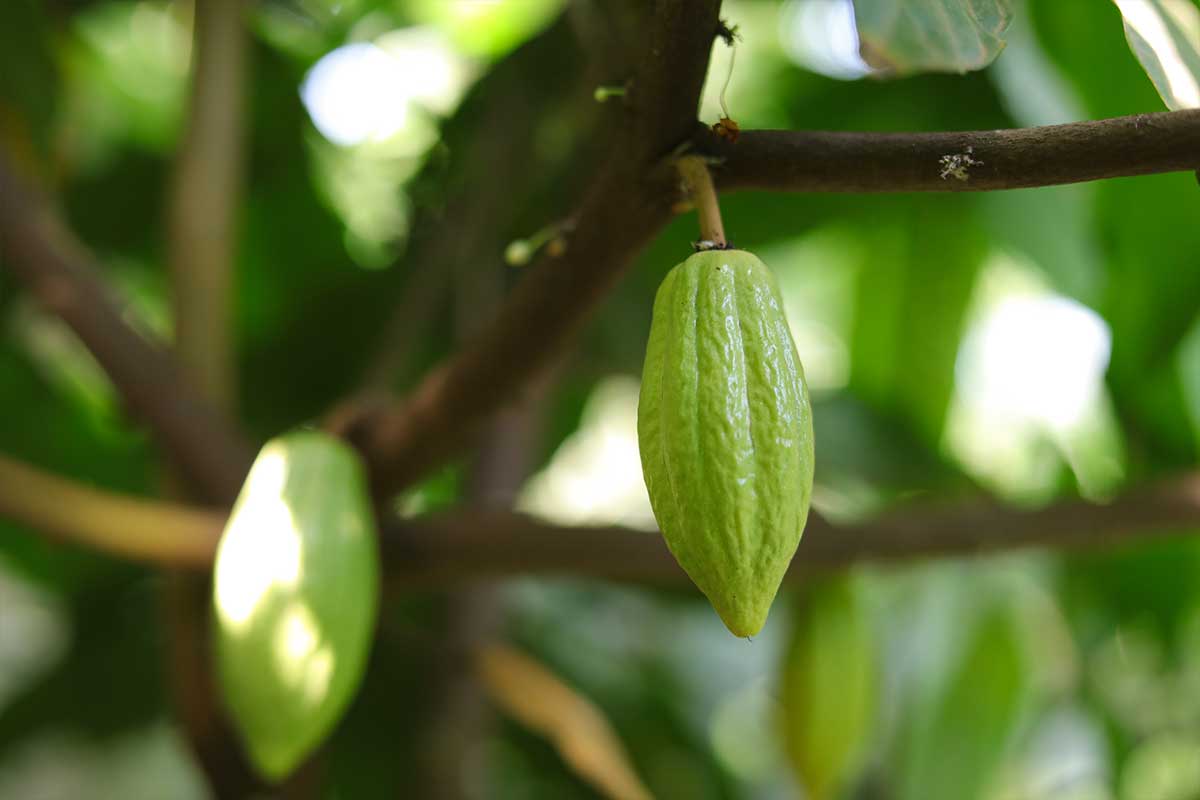
The scientific name of cocoa is “Theobroma cacao” , which means “Food for Gods”. A long time ago, cocoa was used as money and existed as a nutrient drink for the people in Mexico before coffee and tea.
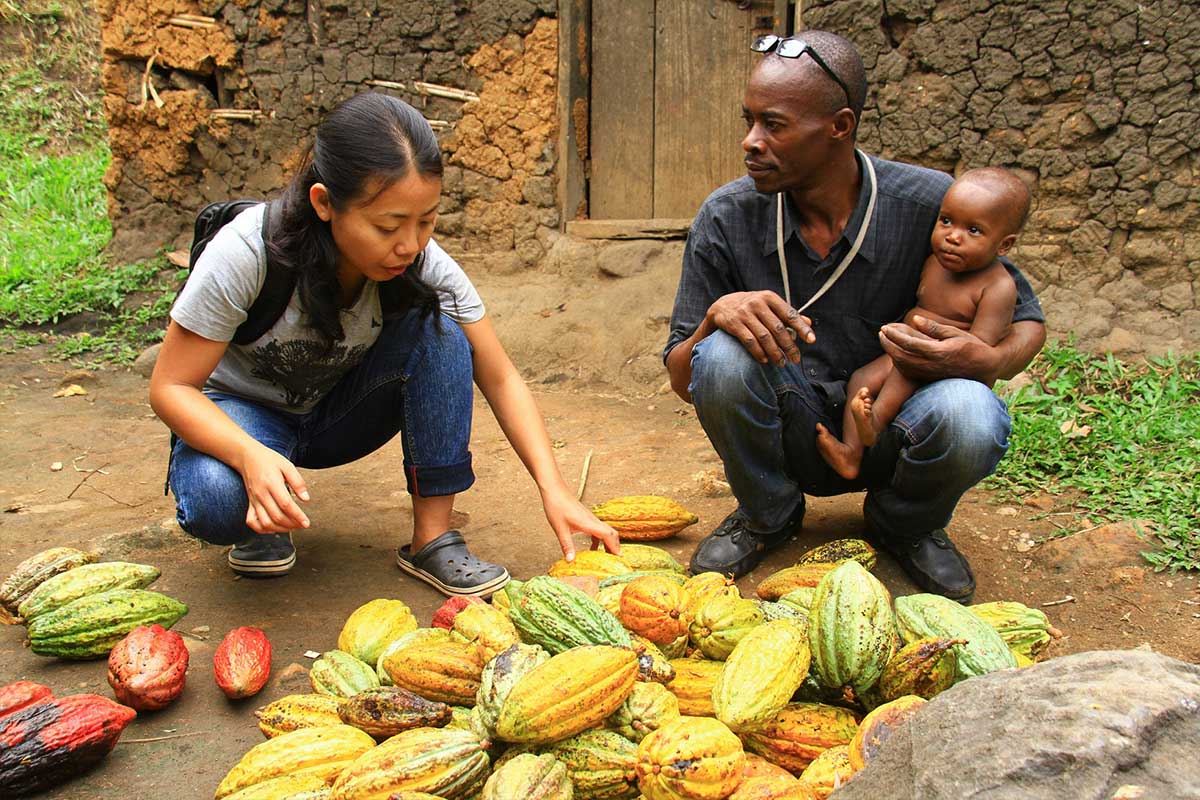
Our cocoa comes from the border between DR Congo and Uganda at the foot of the Mountains of Rwenzori and is purchased from registered and trusted cocoa farmers around the mountainous area.
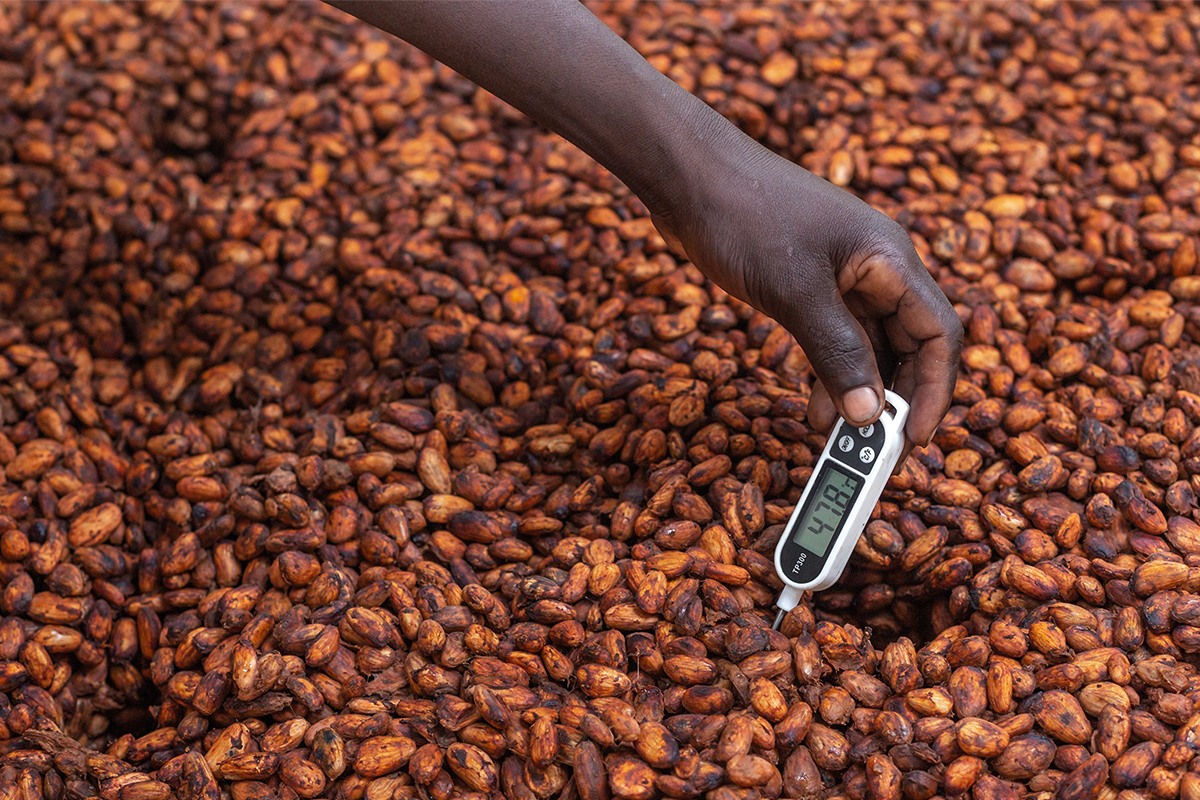
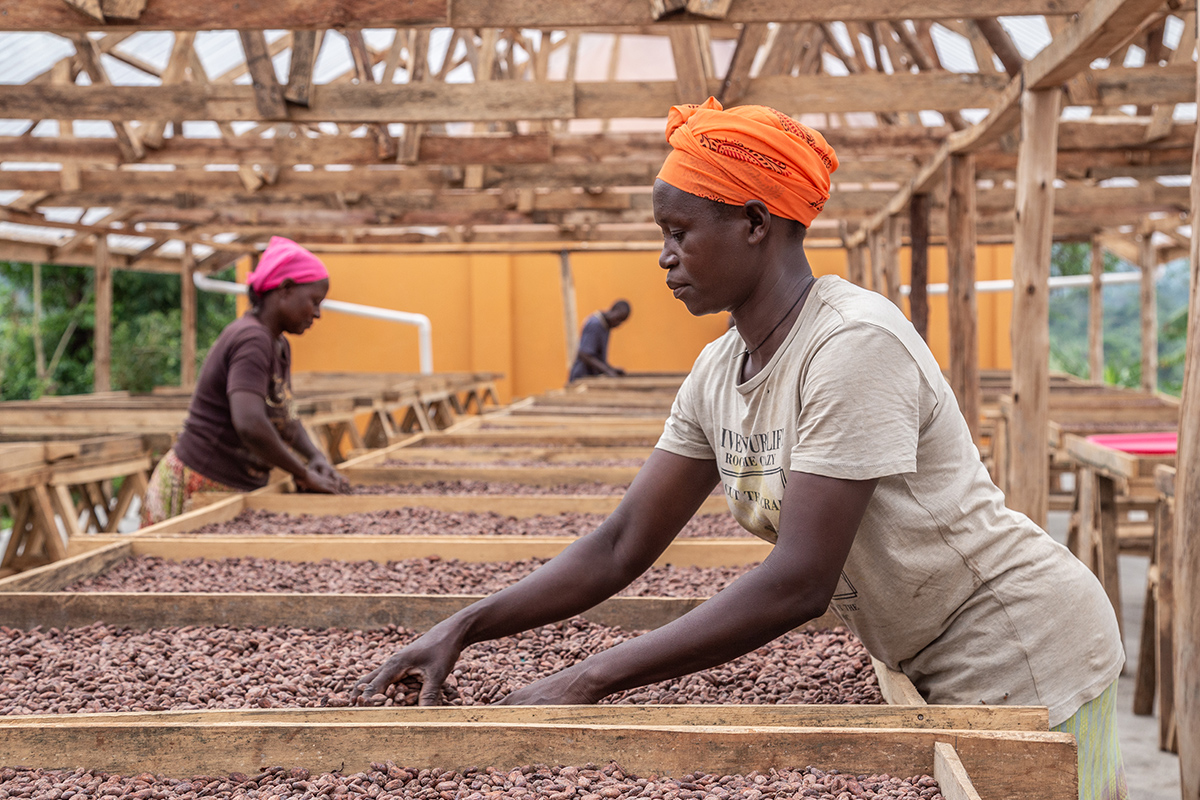
After the purchase, we ferment the cocoa by checking the temperature, pH and sugar content in order to check if good quality fermentation is progressing or not. After the fermentation stage, we continue to dry the cocoa beans in an indirect sunshine area for several days until the cocoa moisture content becomes about 7%. After the drying stage, we remove any cocoa which are small or split, then we are left with the exporting cocoa which is the material of chocolates.
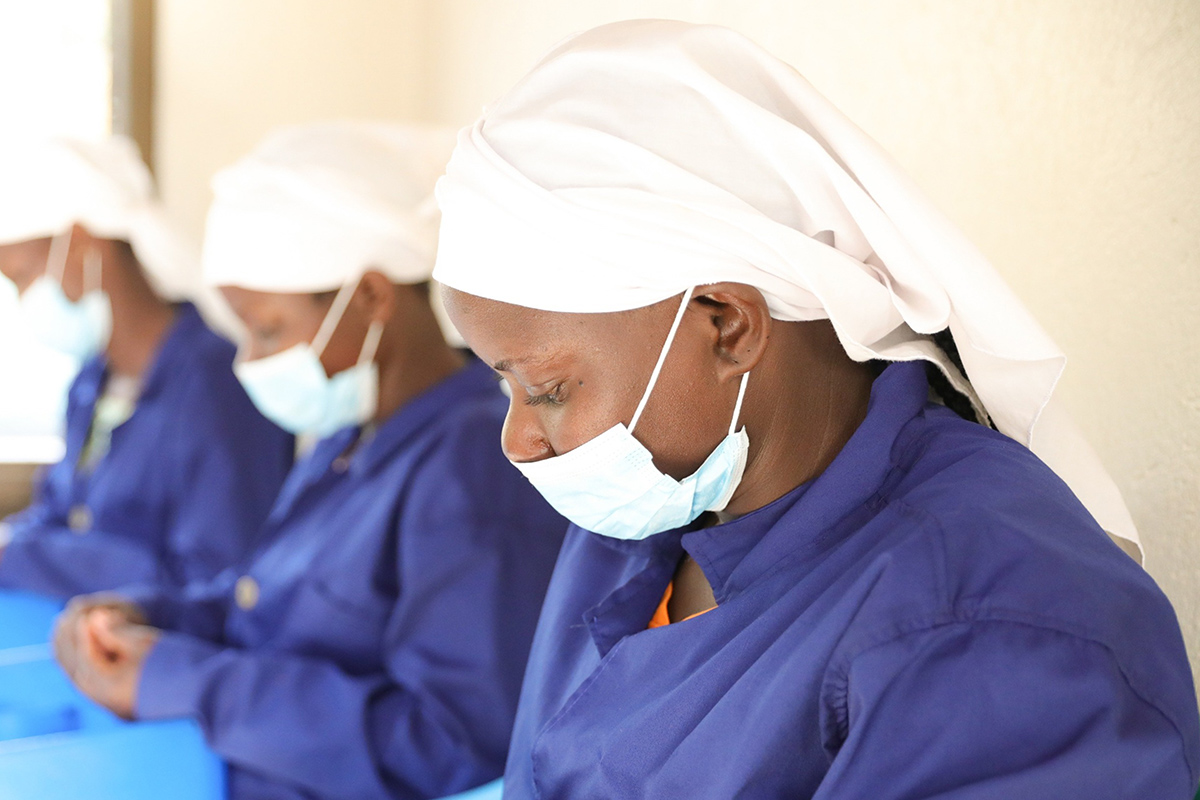
Peeled cocoa
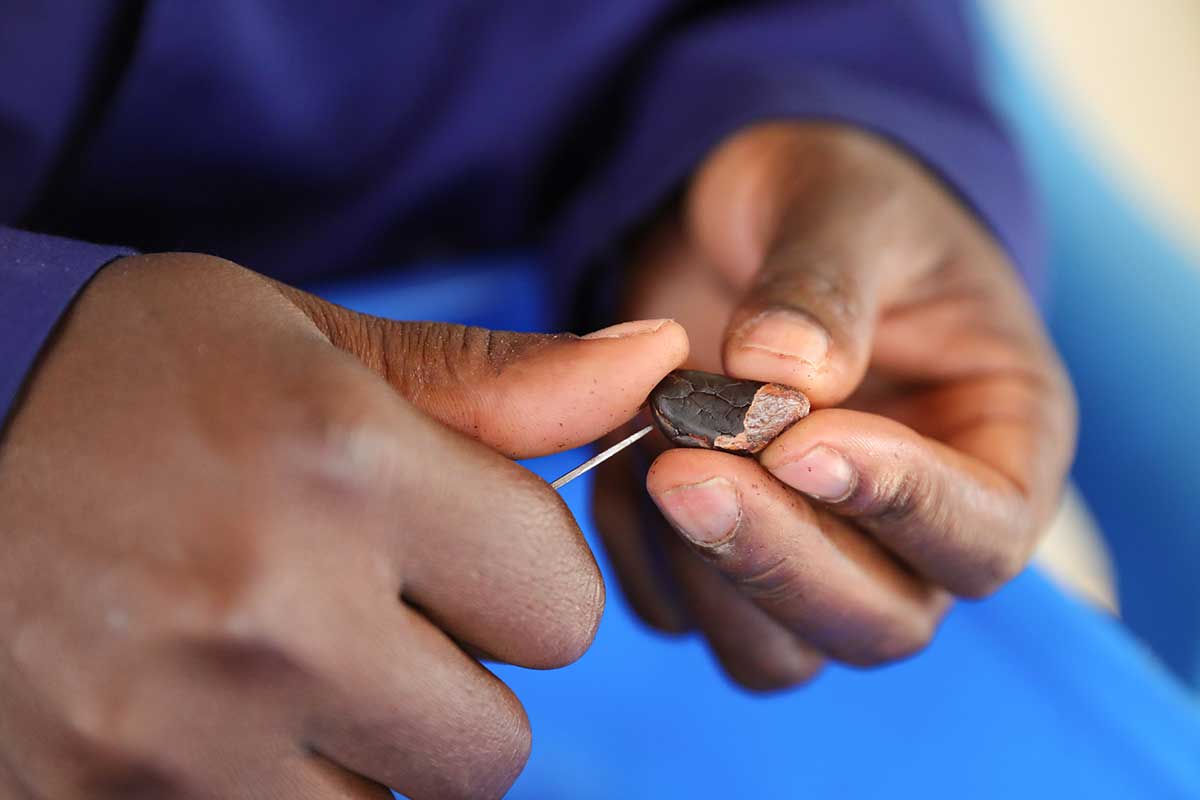
We also produce hand-peeled raw cocoa.
We carefully hand-peel every single coca bean using a knife.
Cocoa beans roasted by the machine can separate the skin from the beans, but raw cocoa beans must be done by hand. In addition, roasted cocoa beans are crushed and sorted, so beans are broken and not whole. That is why hand peeled raw cocoa beans can remain their own round shape as whole beans.